
Stop chasing ghosts. Learn the mathematical reality of the Martingale Trap and why the house edge is inevitable in Roulette.
The Illusion of Pattern
The public approach to the roulette wheel is driven by a fundamental misunderstanding of independent trials which creates a dangerous psychological vacuum. Most players enter the casino floor observing a sequence of red spins and conclude that black is now due because the universe seeks a mathematical equilibrium in the short term. This is the Gambler Fallacy in its purest form and it is the primary engine of house profit. The attraction to predictable patterns is not based on any structural reality of the wheel but rather on a human desire to find order in a random environment. When the crowd leans into these perceived trends they are effectively betting against the laws of probability. The psychological momentum builds as a player watches a streak continue and they feel a mounting pressure to bet against the trend to catch the reversal. This illusion of control is exactly what the house relies on to maintain a consistent flow of capital from amateur players who believe they have spotted a flaw in a system that is designed to be flawless.
The Structural Trap
The structural pressure of the game is hidden in the gap between the mathematical edge and the physical table limits. The house edge on an American wheel sits at five point twenty six percent while the European version is more forgiving at two point seventy percent but both are designed to erode a bankroll over time. The most dangerous hidden tension is the Martingale Trap where a player doubles their stake after every loss to recover the original bet plus a small profit. On paper this looks like a winning strategy but it ignores the reality of table limits which act as the ultimate weapon for the casino. The institutional positioning is clear because the house does not need to win every spin it only needs to ensure that the player eventually hits the ceiling of the table limit. Once that limit is reached the doubling strategy collapses and the player is left with a massive loss that cannot be recovered. The sharp money knows that the limit is not there to protect the player but to prevent the player from utilizing a theoretically infinite bankroll to overcome the house edge.
The Professional Edge
Professional risk management in roulette is not about finding a winning system but about minimizing the rate of decay. The real leverage exists in the selection of the wheel and the placement of the bet. A professional prioritizes the European wheel to slice the house edge nearly in half and focuses on outside bets like red or black to ensure the lowest possible volatility. The value is found in the discipline of bankroll management rather than the pursuit of a lucky strike. While the amateur chases ghosts on the wheel the professional treats the game as a controlled exercise in probability and loss mitigation. The transition from amateur luck to professional risk management happens the moment a player respects the math and accepts that the wheel has no memory. The only way to survive the long term is to avoid the temptation of progressive betting systems and instead operate within a strict budget that prevents the house edge from triggering a total wipeout. Respecting the math is the only real edge a player can possess in a game of pure chance.
The Vincent Vibe Takeaway
The only real edge in roulette is a disciplined bankroll and the refusal to chase the ‘due’ result. Respect the math, or the house will happily take your balance.
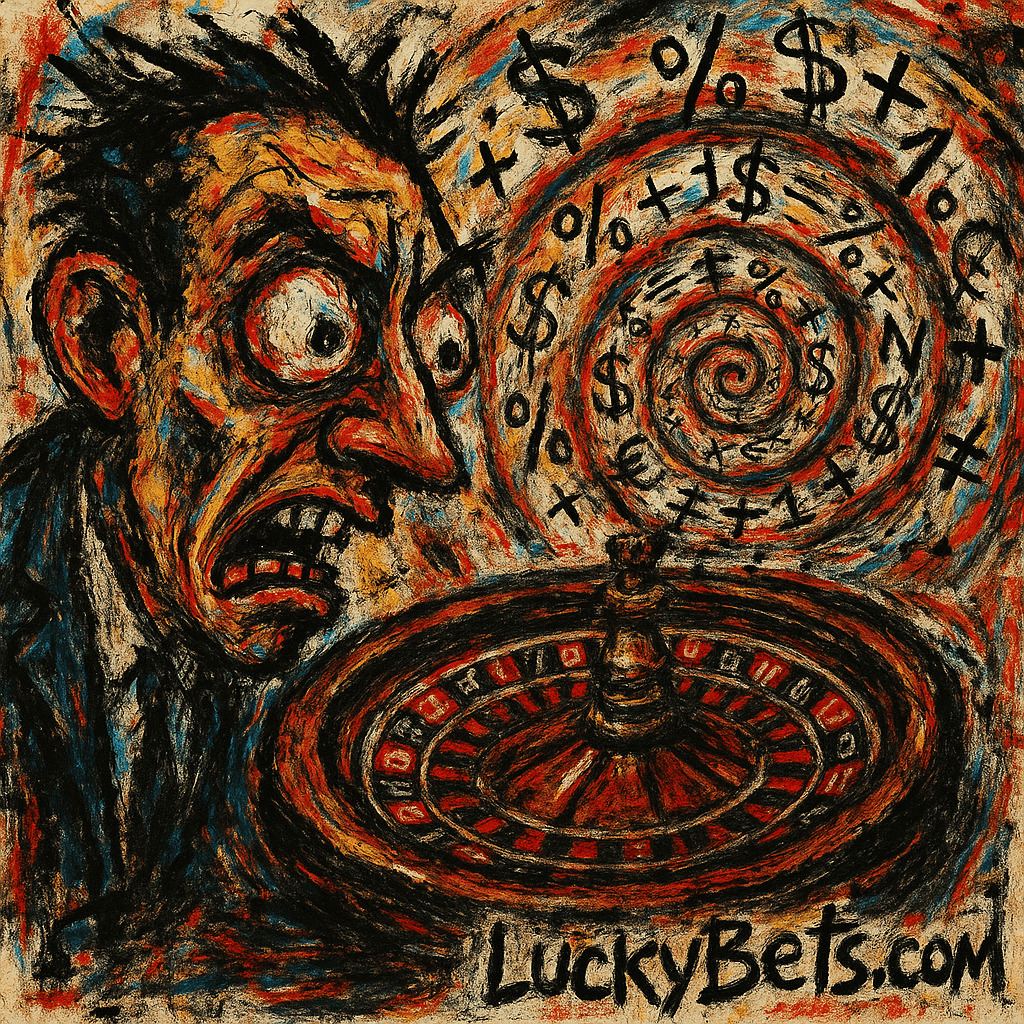
The wheel has no memory, but the house has a perfect ledger.
LuckyBets.com